· by Michael Blair, Nashville's Tree Service
Storm damage puts homeowners under time pressure with a damaged property and someone at the door offering to fix it today. That combination is where the costly mistakes get made.
Safety first, genuinely
Assume any downed limb near a line is energized, and stay well clear. Report lines to the utility rather than approaching, and never attempt to move a limb resting on a wire.
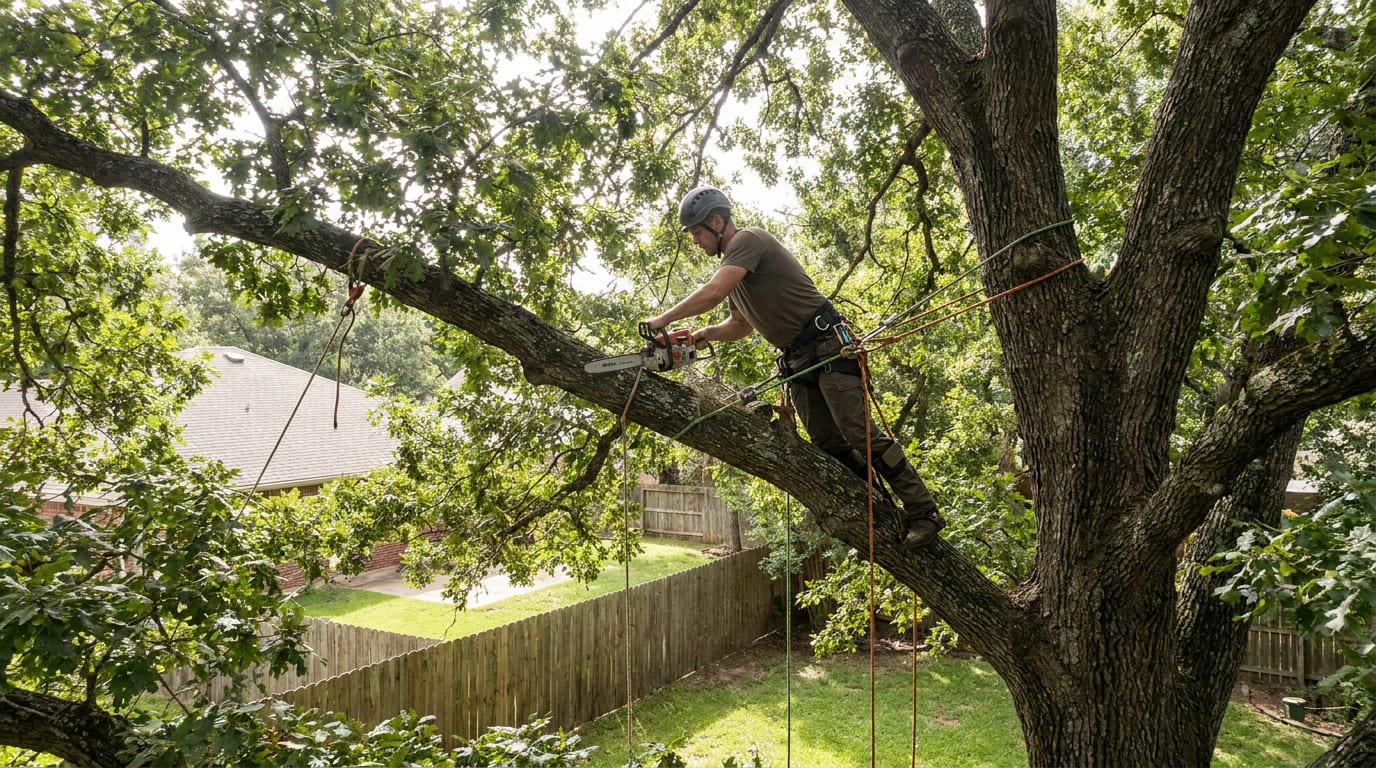
A tree leaning on a structure is under load that will release unpredictably when cut. That is a job for someone with rigging equipment.
What should you do before clearing storm damage?
Photograph everything from several angles before any clearing. Insurers assess from evidence, and a cleared site is harder to claim on.
Keep receipts for emergency work — most policies cover reasonable steps to prevent further damage.
- Treat every downed line as live and report it
- Photograph before clearing anything
- Keep receipts for emergency mitigation
- Get the contractor’s license and insurance certificate
- Never pay in full up front
What does insurance typically cover after a storm?
Broadly, a tree that hits a covered structure is usually a covered loss, including removal from the structure. A tree that falls in the garden and hits nothing is frequently not covered for removal.
Coverage for the tree itself is usually limited, and neighboring trees follow the same knew-or-should-have-known logic about pre-existing hazard.
Storm chasers
After a significant Middle Tennessee storm, out-of-area crews arrive quickly. Some are competent; the pattern to watch is pressure to sign immediately, a large cash deposit, and no local address.
Ask for the Tennessee license and a certificate of insurance naming their carrier, and verify it. An uninsured crew injured on your property becomes your problem.
FAQ
After a Storm Takes a Limb Down — questions
Does insurance cover a tree falling in my yard?
Usually only if it damages a covered structure. A tree that falls and hits nothing is commonly excluded from removal coverage, which surprises people. Policies vary, so it is worth reading the specific wording rather than relying on the general expectation.
What if my neighbor’s tree falls on my house?
Typically your own policy responds, and your insurer may pursue the neighbor’s insurer if the tree was demonstrably hazardous and they were aware. That is why documenting a concern in writing to a neighbor about a visibly declining tree matters — it establishes knowledge.
How do I check a tree company is legitimate?
Ask for a certificate of insurance directly from their carrier, not a copy they hand you, and confirm workers’ compensation coverage. Check for a physical local address and a Tennessee license. Be wary of large cash deposits, pressure to sign immediately, and quotes given without walking the site.
Should a tree service be insured?
Yes. If an uninsured crew member is hurt on your property, that injury can become your problem. Ask for a certificate of insurance that names the company’s carrier, verify it with that carrier, and check the Tennessee license too. Be wary of anyone who pushes you to sign on the spot or wants a large cash deposit.