
· by Michael Blair, Nashville's Tree Service
Most trees in Middle Tennessee are best pruned in late winter, while dormant. There are important exceptions, and one of them — oaks — carries a genuine disease risk if you get it wrong.
Late winter for most
Dormant pruning means no leaves obscuring structure, no active pest and disease pressure, and rapid wound closure once spring growth begins.
It is also easier to see what you are doing and to judge the tree’s architecture without foliage.
Why are oaks pruned only when dormant?
Oak wilt is spread by beetles attracted to fresh pruning wounds, and the risk period runs through the growing season. The safe window for pruning oaks is the dormant season.
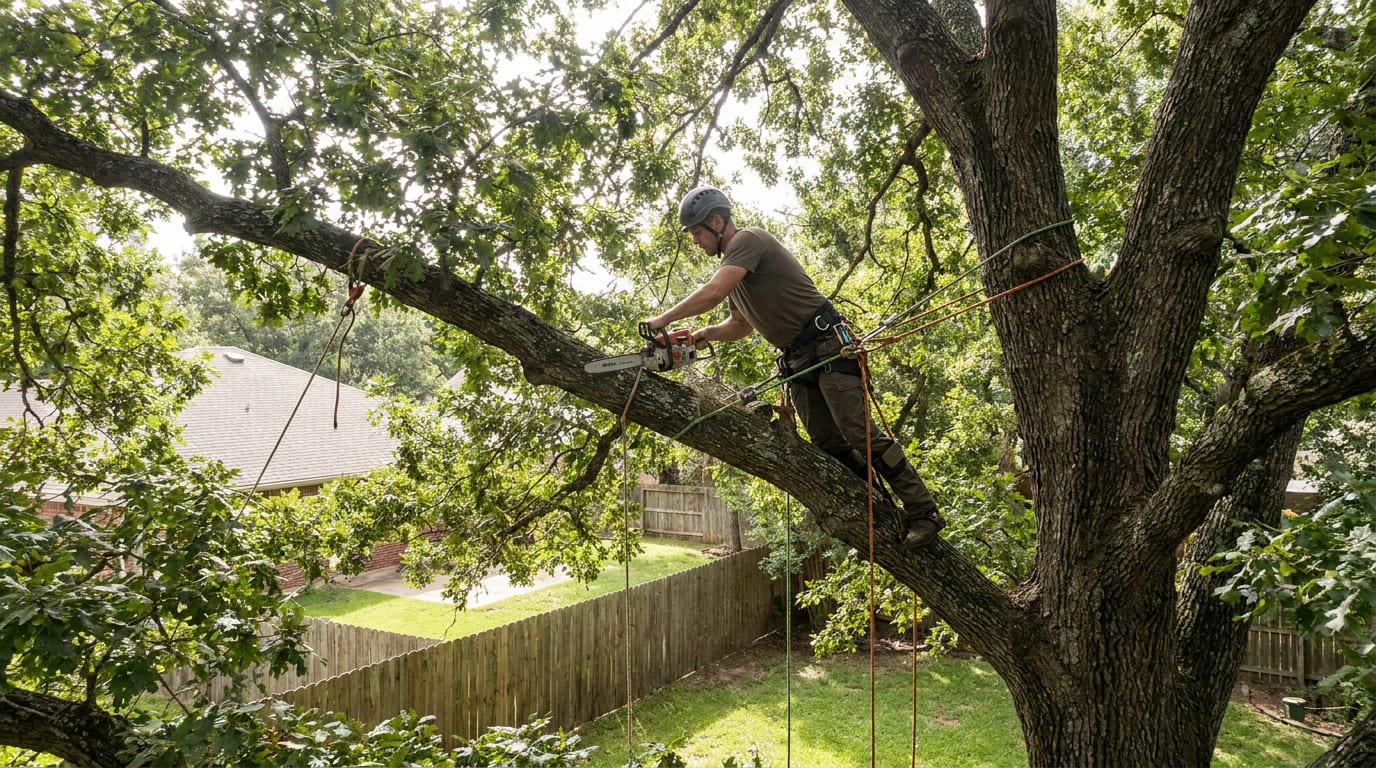
If an oak must be pruned in summer for safety, wounds should be sealed immediately — one of very few cases where wound sealant is advised.
- Most trees: late winter, dormant
- Oaks: dormant season only, avoid spring and summer
- Spring-flowering trees: right after they finish flowering
- Dead and hazardous limbs: any time, safety first
- Avoid heavy pruning in early autumn
Flowering trees
Trees that flower in spring — dogwood, redbud, cherry — set those buds the previous year. Prune them in winter and you remove the flowers.
Prune them immediately after flowering instead. Summer-flowering species can be pruned in late winter without loss.
What pruning should never be done?
Topping. Cutting main limbs back to stubs produces weak regrowth from the cut, invites decay into the exposed wood, and permanently compromises the tree.
It is still offered by some outfits after storms, and it is the clearest signal to get a different quote.
FAQ
When to Prune Trees in Middle Tennessee — questions
When should I prune an oak in Tennessee?
During dormancy — roughly late autumn through late winter. Fresh pruning wounds in the growing season attract the beetles that spread oak wilt, which is present in the region. If a limb must come off in summer for safety, the wound should be sealed immediately, which is otherwise not recommended practice.
Is topping a tree ever acceptable?
No. It removes the tree’s ability to produce food, forces weak regrowth from the cut points, and opens large wounds that decay. The resulting limbs are attached poorly and fail in later storms. A crown reduction by a qualified arborist achieves size control properly and is a different operation.
Can I prune trees in summer?
Light pruning and removing dead or hazardous limbs is fine at any time, and safety always takes precedence. Heavy pruning in summer stresses the tree while it is actively growing, and for oaks it carries a specific disease risk. For structural work, wait for dormancy.
Can you prune trees in the fall?
Light work, yes, but heavy pruning in early autumn is best skipped. Late autumn opens the dormant window, which runs through late winter and is the only safe season to prune oaks, because wounds made while they are growing attract the beetles that spread oak wilt. Dead or hazardous limbs can come off whenever they appear, since safety comes first.